





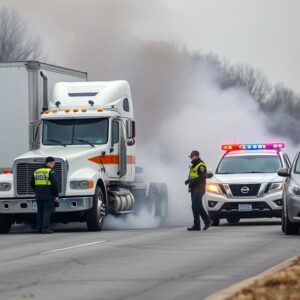
Truck Accident Settlements in Florida: How Much Can You Expect?
Introduction Truck accidents in Florida can be devastating, often leading to severe injuries, significant property damage, and lengthy legal battles. Unlike standard car accidents, commercial truck collisions involve larger vehicles with complex operational factors, making these cases more complicated. The sheer size and weight of a commercial truck mean that accidents tend to result in more serious injuries and higher settlement amounts. This article aims to help truck accident victims in Florida understand the settlement process, what factors influence compensation, and what to expect during negotiations. Knowing what goes into a truck accident settlement can provide clarity and help victims pursue the compensation they deserve. Types of Truck Accident Claims in Florida Truck accident claims can involve different types of damages depending on the severity of the crash and its impact on the victim’s life. Economic damages cover financial losses such as medical bills, lost wages, and vehicle repairs. These are easily quantifiable through receipts, invoices, and pay stubs. Non-economic damages, on the other hand, are meant to compensate for intangible losses such as pain and suffering, emotional distress, and loss of enjoyment of life. These damages vary from case to case and depend on the extent of the victim’s suffering. In rare but severe cases involving gross negligence—such as a trucking company knowingly allowing an unqualified driver on the road—punitive damages may also be awarded. These are intended to punish the responsible party and deter future misconduct. Determining liability in a truck accident case is more complex than in standard car crashes. Responsibility can fall on multiple parties, including the truck driver, trucking company, vehicle manufacturer, maintenance provider, or even the cargo-loading company. If the truck driver was speeding, fatigued, or under the influence, they may be held personally responsible. However, in many cases, the trucking company that employed the driver can also be found liable if they failed to enforce safety regulations, neglected proper training, or pushed the driver to exceed legal work hours. Defective vehicle parts can lead to liability for manufacturers, while poor maintenance practices may implicate a service provider. Additionally, if an improperly secured cargo load contributed to the accident, the loading company may be held accountable. Factors Affecting Settlement Values The amount a victim receives in a truck accident settlement depends on several factors. One of the most significant is the severity of the accident. More serious injuries result in higher medical costs, longer recovery times, and greater pain and suffering. A victim with minor injuries may receive a lower settlement compared to someone who has suffered permanent disabilities requiring lifelong medical care. Additionally, the long-term impact on quality of life plays a crucial role—if the victim is unable to return to work or perform daily activities, the compensation amount increases accordingly. Another major factor influencing settlement values is the strength of the evidence. A well-documented case backed by strong evidence is more likely to result in a higher payout. Important pieces of evidence include police accident reports, witness statements, and black box data from the truck, which records speed, braking, and other critical driving details. Other key records include driver logs, which can reveal violations of hours-of-service regulations, maintenance records that indicate whether the truck was in proper working condition, and drug and alcohol test results that show whether the driver was under the influence at the time of the accident. The more compelling the evidence, the stronger the case for securing a higher settlement. Florida-Specific Laws Florida has specific laws that impact truck accident claims. One of the most important is the statute of limitations, which dictates how long a victim has to file a lawsuit. In Florida, truck accident victims generally have four years from the date of the accident to file a personal injury claim. If the accident resulted in wrongful death, the deadline is shorter—two years from the date of death. While there are some exceptions, missing this deadline can mean losing the right to seek compensation. Another key legal principle in Florida is comparative negligence. Florida follows a modified comparative fault system, meaning a victim can still recover damages even if they are partially at fault, as long as they are less than 50% responsible. However, the total compensation amount is reduced by the victim’s percentage of fault. For example, if a victim is found to be 20% responsible for the crash, their settlement will be reduced by 20%. Settlement Process The truck accident settlement process in Florida typically begins with an investigation phase. During this time, attorneys and insurance adjusters gather evidence, consult with experts, and review medical records to assess the extent of damages. This phase is crucial because it establishes the foundation for negotiations. The more thorough the documentation, the stronger the claim. Once the investigation is complete, the negotiation process begins. The victim’s attorney will submit a demand letter outlining the extent of damages and the requested settlement amount. The insurance company may respond with a lower offer, leading to a back-and-forth negotiation. In some cases, mediation may be used to reach a fair resolution without going to court. If negotiations fail, the case may proceed to litigation, where a judge or jury determines the final settlement amount. Average Settlement Ranges Settlement amounts for truck accidents in Florida can vary widely based on the severity of injuries and the extent of damages. Minor injury cases may result in settlements ranging from $20,000 to $75,000, while serious injury cases can fall between $100,000 and $500,000. Catastrophic injuries that result in permanent disabilities often lead to settlements exceeding $1 million. In wrongful death cases, settlements can also surpass $1 million, covering funeral expenses, loss of income, and emotional suffering. A typical truck accident settlement includes compensation for medical expenses, both past and future, lost wages, property damage, and pain and suffering. The final amount depends on factors such as insurance coverage limits, the strength of the case, and the willingness of the insurance company to negotiate. Insurance Considerations Trucking companies are required to carry commercial